Specs sourced · prices dated

Best solar generator for home backup (2026)

PreppedPower Editorial Team How we review

Based on manufacturer specs and published third-party measurements. We earn a commission if you buy through our links. How we earn

The best solar generator for home backup, picked on solar input limits, voltage window, expansion and recharge days in winter sun, with the calculations shown.

On this page

The short answer

Our pick at PreppedPower for a solar generator for home backup is the Jackery Explorer 5000 Plus. It accepts the most solar power of these three, has a separate high-voltage input for long panel strings, and stores the most energy, so a sunny day can carry the house through the night. The Anker SOLIX F3000 is the smaller entry point with its own high-voltage solar input, and the Bluetti Apex 300 has the longest-rated battery life and 120/240 V from a single unit. In winter, the solar input limit matters as much as the battery: a station that caps its input wastes the panels you add past that point.

01

Banking the most winter sun: highest solar input and capacity here

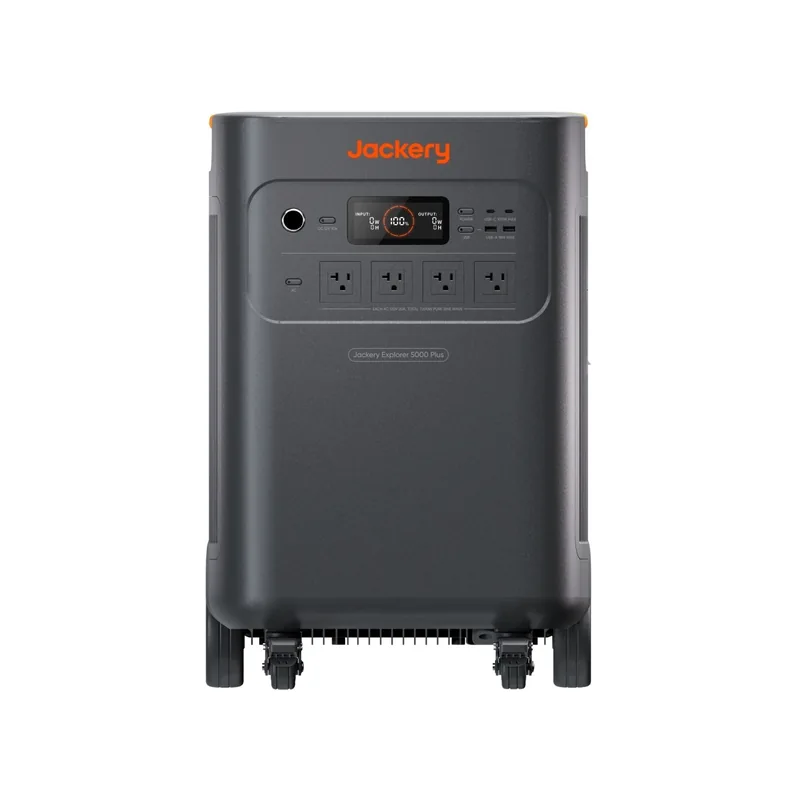
Jackery Explorer 5000 Plus

≈ 1.2 days at reference daily energy · calculated

$3,028.25

Amazon · as of · station only

Check price at Amazon →
02

A smaller start with high-voltage solar and room to grow

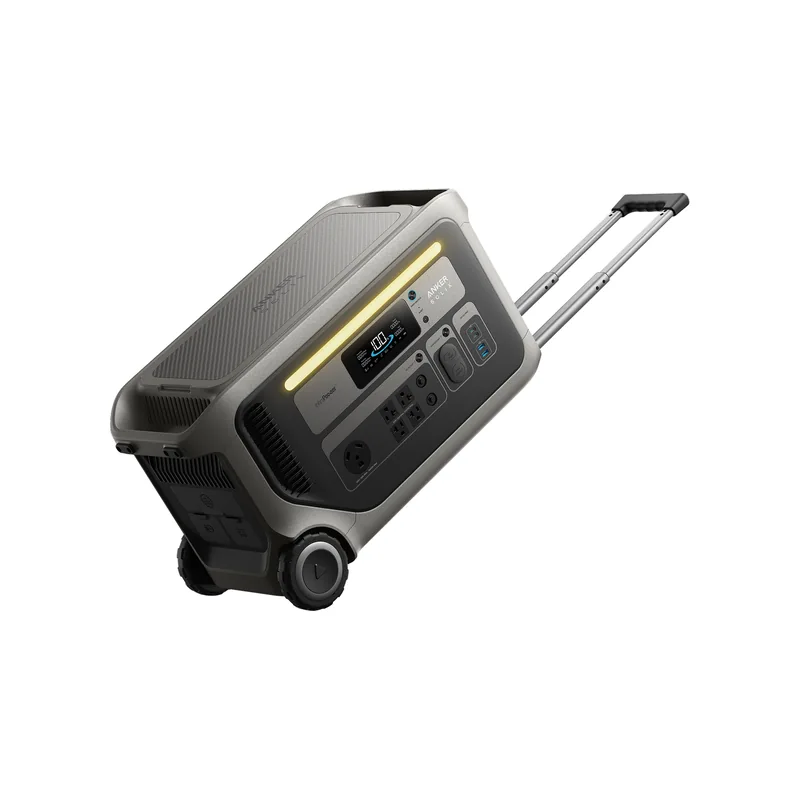
Anker SOLIX F3000

≈ 0.7 days at reference daily energy · calculated

$1,398.98

Amazon · as of · station only

Check price at Amazon →
03

Long battery life and 240 V from one unit

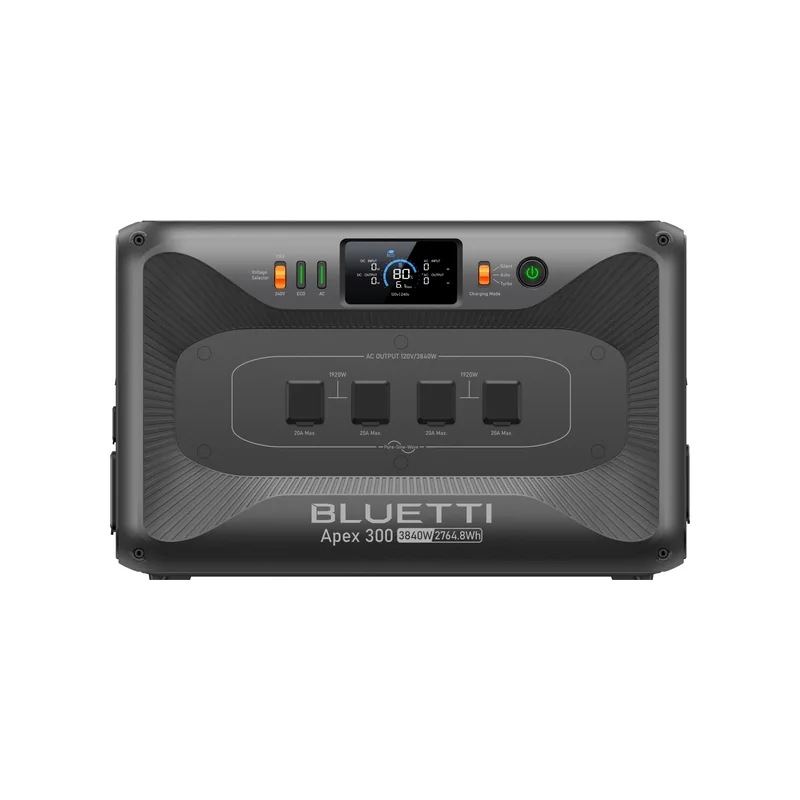
BLUETTI Apex 300

≈ 0.6 days at reference daily energy · calculated

$1,498.98

Amazon · as of · station only

Check price at Amazon →

We earn a commission if you buy through these links, at no extra cost to you. Spec scores use the published rubric; incomplete research is flagged beside each score.

What a solar-backed outage day needs from a power station

One day of reference loads

≈ 4330 Wh

rated capacity · calculated

The reference loads use 3,680 Wh/day. At 85% usable energy, this requires about 4,330 Wh rated capacity per day, before solar. Standby draw and actual cycling can change this estimate. These are reference inputs for a winter outage, not measurements of your appliances: the furnace blower is counted for about four hours a day. Solar recharge assumes a large array and short winter days; your local sun hours decide the real figure.

Reference loads

  • Refrigerator: 400 W running ; 1,200 W starting ; 1,200 Wh/day; 120 V
  • Gas furnace blower (1/2 hp): 500 W running ; 1,600 W starting ; 2,000 Wh/day; 120 V
  • Router and modem: 20 W running ; 480 Wh/day; 120 V

920 W known simultaneous load; 3,680 Wh/day calculated using stated daily energy or 8 running hours per day.

Energy-only loads do not establish output compatibility. Check each motor's start demand; this model assumes one motor starts at a time.

The picks

Top pick Whole home
Jackery Explorer 5000 Plus

Spec score: 5.5 / 10 · provisional

Whole home · 6 catalogue models · 82.5% of weighted inputs available.

No points awarded for missing inputs: AC charging; Verified warranty terms; Dated recall research. This is incomplete research, not a safety finding.

Price input: Amazon, station only, checked Oct 17, 2026.

Score calculation and limitations →

Best for · Banking the most winter sun: highest solar input and capacity here

Jackery Explorer 5000 Plus

5,040 Wh rated7,200 W continuousLFP120/240 V134.5 lb

≈ 1.2 days at reference daily energy · calculated, 85% efficiency, before solar

Recall status: not checked yet. Check the CPSC database before buying.

$3,028.25

Amazon · as of · station only

Check price at Amazon →
Pros
  • Highest maximum solar input of the three
  • Separate high-voltage solar input for long panel strings
  • Expands furthest with Battery Pack 5000 Plus
Trade-offs
  • Heaviest of the three to move
  • Cycles are rated to a lower remaining capacity than the Bluetti's

Known continuous load: 920 W against 7,200 W — within the published rating.

Surge check: within the published rating

1,600 W starting + 420 W other running loads, against 14,400 W surge. Boost modes do not count for motors. Check continuous output separately.

3–5 kWh
Anker SOLIX F3000

Spec score: 6.1 / 10 · provisional

3–5 kWh · 20 catalogue models · 90% of weighted inputs available.

No points awarded for missing inputs: Verified warranty terms; Dated recall research. This is incomplete research, not a safety finding.

Price input: Amazon, station only, checked Oct 17, 2026.

Score calculation and limitations →

Best for · A smaller start with high-voltage solar and room to grow

Anker SOLIX F3000

3,072 Wh rated3,600 W continuousLFP120 (240 when paired) V91.5 lb

≈ 0.7 days at reference daily energy · calculated, 85% efficiency, before solar

Recall status: not checked yet. Check the CPSC database before buying.

$1,398.98

Amazon · as of · station only

Check price at Amazon →
Pros
  • High-voltage solar input range
  • Takes Anker's expansion batteries
  • Anker lists an inlet box and a home backup kit for it
Trade-offs
  • 120 V only on its own; 240 V needs a second unit and Anker's hub
  • Its solar input caps out lower than the Jackery's

Known continuous load: 920 W against 3,600 W — within the published rating.

Surge check: within the published rating

1,600 W starting + 420 W other running loads, against 7,200 W surge. Boost modes do not count for motors. Check continuous output separately.

≈2 kWh
BLUETTI Apex 300

Spec score: 7.3 / 10 · provisional

≈2 kWh · 22 catalogue models · 85% of weighted inputs available.

No points awarded for missing inputs: Surge output; Verified warranty terms; Dated recall research. This is incomplete research, not a safety finding.

Price input: Amazon, station only, checked Oct 17, 2026.

Score calculation and limitations →

Best for · Long battery life and 240 V from one unit

BLUETTI Apex 300

2,764.8 Wh rated3,840 W continuousLFP120/240 split-phase V83.78 lb

≈ 0.6 days at reference daily energy · calculated, 85% efficiency, before solar

Recall status: not checked yet. Check the CPSC database before buying.

$1,498.98

Amazon · as of · station only

Check price at Amazon →
Pros
  • Longest-rated cycle life of the three
  • 120/240 V output from a single unit
  • Bluetti sells an add-on that raises solar input further, with an expansion battery
Trade-offs
  • Surge rating not published; check motor loads with Bluetti before buying
  • Low-voltage solar inputs only, so long series panel strings are out

Known continuous load: 920 W against 3,840 W — within the published rating.

Surge check: rating not published

1,600 W starting + 420 W other running loads, against Not published W surge. Boost modes do not count for motors. Check continuous output separately.

Side by side

Core specs· published specs; runtimes calculated
Core specs Jackery Explorer 5000 PlusAnker SOLIX F3000BLUETTI Apex 300
Outlets / home integration TT-30: 0; L14-30: 1; Jackery Smart Transfer Switch; Jackery Manual Transfer Switch (240V 50A) for Explorer 5000 Plus TT-30: 1; L14-30: 0; Anker SOLIX Bi-Directional Inlet Box; Anker SOLIX Double Voltage Hub (2x F3000 for 240V); Anker SOLIX 120V Generator Input Adapter; Anker SOLIX EV Charging Adapter; Anker SOLIX Power Saver Kit (For F3000); F3000 Home Backup Kit (bundle listed on brand store) TT-30: 1; L14-30: 0; Apex 300 Home Integration Kit / Home Backup Kit; AT1 panel; Hub A1 (parallel up to 3 units)
240 V output Yes — check required configuration Yes — check required configuration Yes — check required configuration
Reference daily energy coverage ≈ 1.2 days (85% efficiency; no solar) CALC ≈ 0.7 days (85% efficiency; no solar) CALC ≈ 0.6 days (85% efficiency; no solar) CALC
Max solar input 4,000 W 2,400 W 2,400 W
Solar voltage window Low-PV 16-60V; High-PV 135-450V 11-165V (high-PV); 11-60V (low-PV) 12-60V
Max expanded capacity 30,000 Wh 12,288 Wh 19,353.6 Wh
Solar recharge days · base battery 7,740 Wh/day solar; ≈ 1.2 days after reference loads CALC 6,192 Wh/day solar; ≈ 1.2 days after reference loads CALC 6,192 Wh/day solar; ≈ 1.1 days after reference loads CALC
Rated capacity 5,040 Wh 3,072 Wh 2,764.8 Wh
Continuous AC output 7,200 W 3,600 W 3,840 W
Surge 14,400 W 7,200 W Not published
Voltage 120/240 V 120 (240 when paired) V 120/240 split-phase V
UPS switchover 20 ms 20 ms 20 ms
Weight 134.5 lb 91.5 lb 83.78 lb
Cycle rating 4,000 to 70% 3,000 to 80% 6,000 to 80%
Price · station only
$3,028.25

Amazon · as of · station only

$0.60 per rated Wh · CALC · Amazon · Oct 17, 2026 · station only

Check price at Amazon →
$1,398.98

Amazon · as of · station only

$0.46 per rated Wh · CALC · Amazon · Oct 17, 2026 · station only

Check price at Amazon →
$1,498.98

Amazon · as of · station only

$0.54 per rated Wh · CALC · Amazon · Oct 17, 2026 · station only

Check price at Amazon →
Full specifications, measurements and source details
Core specs · Solar assumes 3000 W panels, 3 peak sun hours/day, 86% derating; input-capped, base battery, no charging losses. Check panel open-circuit voltage against the station limits.
Specification Jackery Explorer 5000 PlusAnker SOLIX F3000BLUETTI Apex 300
Measured usable energy Not published Not published Not published
Price per measured usable Wh · station only Not published — requires a sourced measurement and dated price Not published — requires a sourced measurement and dated price Not published — requires a sourced measurement and dated price
Outlets / home integration TT-30: 0; L14-30: 1; Jackery Smart Transfer Switch; Jackery Manual Transfer Switch (240V 50A) for Explorer 5000 Plus
BRAND
TT-30: 1; L14-30: 0; Anker SOLIX Bi-Directional Inlet Box; Anker SOLIX Double Voltage Hub (2x F3000 for 240V); Anker SOLIX 120V Generator Input Adapter; Anker SOLIX EV Charging Adapter; Anker SOLIX Power Saver Kit (For F3000); F3000 Home Backup Kit (bundle listed on brand store)
BRAND
TT-30: 1; L14-30: 0; Apex 300 Home Integration Kit / Home Backup Kit; AT1 panel; Hub A1 (parallel up to 3 units)
BRAND
240 V output Yes — check required configuration
BRAND
Yes — check required configuration
BRAND
Yes — check required configuration
BRAND
Reference daily energy coverage ≈ 1.2 days (85% efficiency; no solar)
CALC
≈ 0.7 days (85% efficiency; no solar)
CALC
≈ 0.6 days (85% efficiency; no solar)
CALC
Max solar input 4,000 W
BRAND
2,400 W
BRAND
2,400 W
BRAND
Solar voltage window Low-PV 16-60V; High-PV 135-450V
BRAND
11-165V (high-PV); 11-60V (low-PV)
BRAND
12-60V
BRAND
Max expanded capacity 30,000 Wh
BRAND
12,288 Wh
BRAND
19,353.6 Wh
BRAND
Solar recharge days · base battery 7,740 Wh/day solar; ≈ 1.2 days after reference loads
CALC
6,192 Wh/day solar; ≈ 1.2 days after reference loads
CALC
6,192 Wh/day solar; ≈ 1.1 days after reference loads
CALC
Rated capacity 5,040 Wh
BRAND
3,072 Wh
BRAND
2,764.8 Wh
BRAND
Continuous AC output 7,200 W
BRAND
3,600 W
BRAND
3,840 W
BRAND
Surge 14,400 W
BRAND
7,200 W
BRAND
Not published
BRAND
Voltage 120/240 V
BRAND
120 (240 when paired) V
BRAND
120/240 split-phase V
BRAND
UPS switchover 20 ms
BRAND
20 ms
BRAND
20 ms
BRAND
Weight 134.5 lb
BRAND
91.5 lb
BRAND
83.78 lb
BRAND
Cycle rating 4,000 to 70%
BRAND
3,000 to 80%
BRAND
6,000 to 80%
BRAND
Price · station only
$3,028.25

Amazon · as of · station only

$0.60 per rated Wh · CALC · Amazon · Oct 17, 2026 · station only

Check price at Amazon →
$1,398.98

Amazon · as of · station only

$0.46 per rated Wh · CALC · Amazon · Oct 17, 2026 · station only

Check price at Amazon →
$1,498.98

Amazon · as of · station only

$0.54 per rated Wh · CALC · Amazon · Oct 17, 2026 · station only

Check price at Amazon →

The maths, shown

Every runtime here is calculated from rated capacity. Here is the first pick, step by step.

5,040 Wh rated × 0.85 ÷ 3,680 Wh/day = ≈ 1.2 days calculated coverage, before solar.

Daily energy uses each explicit dailyWh, otherwise runningW × 8 hours/day. Output and surge checks use running watts separately.

Before you buy

Solar panels connect to the station's own solar inputs. Getting the station's power into your home circuits is a separate step: a power inlet with a panel interlock, a listed manual transfer switch, or the brand's own home panel, installed by a licensed electrician. Never backfeed a house through a wall outlet.

Read our connection and power-station safety guidance before connecting home circuits.

Questions

What is a solar generator?

A battery power station paired with solar panels. There is no engine and no fuel: the panels recharge the battery, and the station's inverter powers your appliances. Size the battery to your loads and the panels to the station's solar input limit.

How many solar panels do I need for home backup?

Start from the energy you use per day. Divide it by your location's peak sun hours and by 0.86 for typical system losses (NREL's PVWatts default) to get the panel watts that would replace it. Then check the station's maximum solar input: panel watts above that limit add nothing. PVWatts gives sun hours for your address, and winter figures are much lower than summer ones.

What does the solar voltage window mean?

Each solar input accepts a range of panel voltages, shown in the table. Panels wired in series add their voltages, so the string's open-circuit voltage has to stay inside that range. Open-circuit voltage rises in cold weather, so leave margin below the top of the window. A high-voltage input lets you run longer strings with less current.

How long does solar take to recharge one of these in winter?

The table's recharge days are calculated, not measured: our reference array and winter sun hours, capped at each station's solar input, minus the reference loads the house uses that day. Cloudy days, panel angle, shade and snow cut that output, so treat the result as a best case for clear weather.

Will my rooftop solar charge a power station during an outage?

Usually not. A standard grid-tied rooftop system shuts down when the grid goes down so it can't send power onto lines that crews are working on. Unless your system was designed with backup capability, the panels that charge a portable station during an outage are the portable ones you connect to it directly.

Can I claim the federal solar tax credit for a solar generator?

Not for new purchases. The IRS says the residential clean energy credit (25D) is not allowed for expenditures made after December 31, 2025, and an expenditure counts as made when installation is complete. Some brand pages still advertise a 30 percent credit; we don't repeat that claim. Check DSIRE and your utility for state or local incentives.

Sources

Specifications are manufacturer claims unless another source type is shown. Price dates appear beside each price.