Specs sourced · prices dated

Best portable power station for home backup (2026)

PreppedPower Editorial Team How we review

Based on manufacturer specs and published third-party measurements. We earn a commission if you buy through our links. How we earn

The best portable power station for home backup, sized on a real outage day: fridge, furnace blower, router and a 240 V well pump, with every calculation shown.

On this page

The short answer

Our pick at PreppedPower for home backup is the EcoFlow DELTA Pro 3. It holds the most energy of these three, it is the one with an independent capacity measurement (OutdoorGearLab), it supplies 120/240 V for loads like a well pump, and EcoFlow's Smart Home Panel 2 and extra batteries let it grow into a larger system. The Anker SOLIX F3800 Plus has the most output and the furthest expansion path, and the Jackery HomePower 3600 Pro Max is the lightest way to get 240 V here. Be realistic about one charge: none of the three covers a full winter day of our reference loads, so plan for extra batteries, solar or a generator if your outages last longer than an evening.

01

The most stored energy here, backed by an independent measurement

EcoFlow DELTA Pro 3

≈ 0.7 days at reference daily energy · calculated

$2,799

Amazon · as of · station only

Check price at Amazon →
02

Running the biggest loads and growing the system furthest

Anker SOLIX F3800 Plus

≈ 0.6 days at reference daily energy · calculated

$2,599.99

Amazon · as of · station only

Check price at Amazon →
03

The lightest route to 240 V output in this group

Jackery HomePower 3600 Pro Max

≈ 0.6 days at reference daily energy · calculated

$2,099

Amazon · as of · station only

Check price at Amazon →

We earn a commission if you buy through these links, at no extra cost to you. Spec scores use the published rubric; incomplete research is flagged beside each score.

What an outage day needs from a power station

One day of reference loads

≈ 6100 Wh

rated capacity · calculated

The reference loads use 5,180 Wh/day. At 85% usable energy, this requires about 6,095 Wh rated capacity per day, before solar. Standby draw and actual cycling can change this estimate. These are reference inputs for a winter outage day, not measurements of your appliances: the furnace blower is counted for about four hours a day and the well pump for about one. If your home is on city water, remove the well pump and the 240 V requirement goes with it.

Reference loads

  • Refrigerator: 400 W running ; 1,200 W starting ; 1,200 Wh/day; 120 V
  • Gas furnace blower (1/2 hp): 500 W running ; 1,600 W starting ; 2,000 Wh/day; 120 V
  • Router and modem: 20 W running ; 480 Wh/day; 120 V
  • Well pump (1 hp): 1,500 W running ; 3,000 W starting ; 1,500 Wh/day; 240 V

2,420 W known simultaneous load; 5,180 Wh/day calculated using stated daily energy or 8 running hours per day. This load needs 240 V.

Energy-only loads do not establish output compatibility. Check each motor's start demand; this model assumes one motor starts at a time.

The picks

Top pick 3–5 kWh
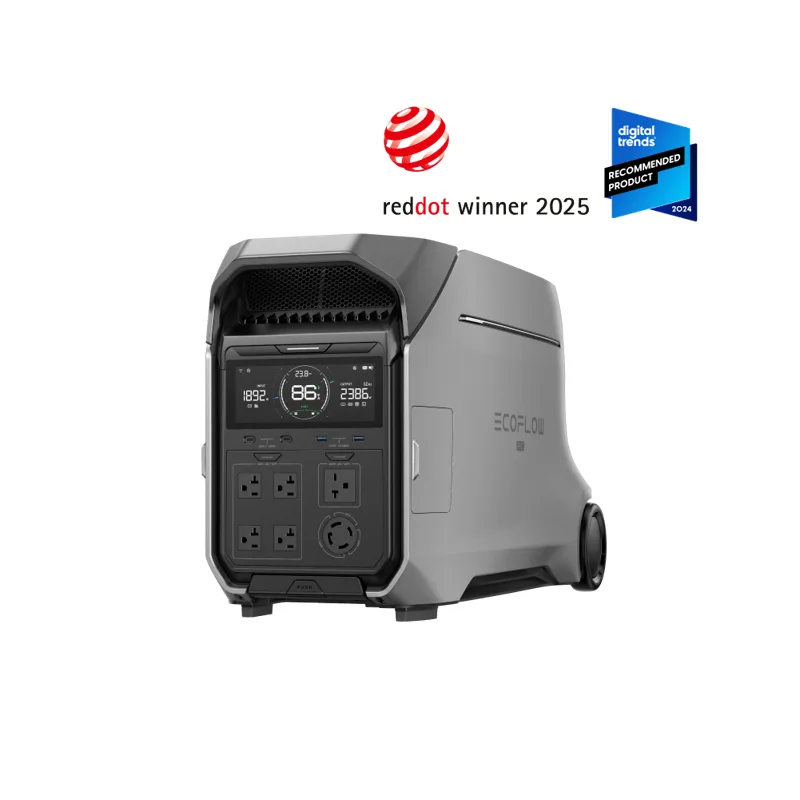
EcoFlow DELTA Pro 3

Spec score: 6.4 / 10 · provisional

3–5 kWh · 20 catalogue models · 92.5% of weighted inputs available.

No points awarded for missing inputs: AC charging. This is incomplete research, not a safety finding.

Price input: Amazon, station only, checked Oct 17, 2026.

Score calculation and limitations →

Best for · The most stored energy here, backed by an independent measurement

EcoFlow DELTA Pro 3

4,096 Wh rated4,000 W continuousLFP120/240 split-phase V113.5 lb

≈ 0.7 days at reference daily energy · calculated, 85% efficiency, before solar

Recall status: not checked yet. Check the CPSC database before buying.

$2,799

Amazon · as of · station only

Check price at Amazon →
Pros
  • Most rated capacity of these three
  • OutdoorGearLab measured its usable AC output; see the table
  • Works with EcoFlow's Smart Home Panel 2 and DELTA Pro 3 extra batteries
Trade-offs
  • Lowest expansion ceiling of the three
  • Smart Home Panel 2 installation is a separate electrician job

Known continuous load: 2,420 W against 4,000 W — within the published rating.

Surge check: within the published rating

3,000 W starting + 920 W other running loads, against 8,000 W surge. Boost modes do not count for motors. Check continuous output separately.

3–5 kWh
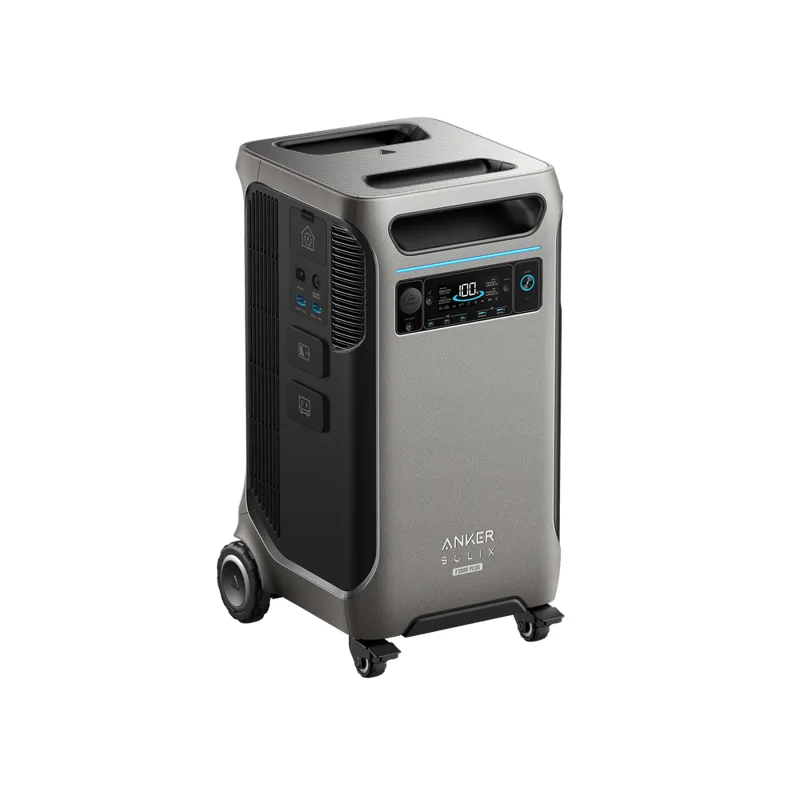
Anker SOLIX F3800 Plus

Spec score: 6.7 / 10 · provisional

3–5 kWh · 20 catalogue models · 95% of weighted inputs available.

No points awarded for missing inputs: Dated recall research. This is incomplete research, not a safety finding.

Price input: Amazon, station only, checked Oct 17, 2026.

Score calculation and limitations →

Best for · Running the biggest loads and growing the system furthest

Anker SOLIX F3800 Plus

3,840 Wh rated6,000 W continuousLFP120/240 split-phase V136.7 lb

≈ 0.6 days at reference daily energy · calculated, 85% efficiency, before solar

Recall status: not checked yet. Check the CPSC database before buying.

$2,599.99

Amazon · as of · station only

Check price at Amazon →
Pros
  • Highest continuous output of the three
  • Expands furthest with BP3800 expansion batteries
  • Two high-voltage solar inputs
Trade-offs
  • Heaviest of the three, though it rolls on wheels
  • Lower cycle rating than the EcoFlow to the same remaining capacity

Known continuous load: 2,420 W against 6,000 W — within the published rating.

Surge check: within the published rating

3,000 W starting + 920 W other running loads, against 9,000 W surge. Boost modes do not count for motors. Check continuous output separately.

3–5 kWh
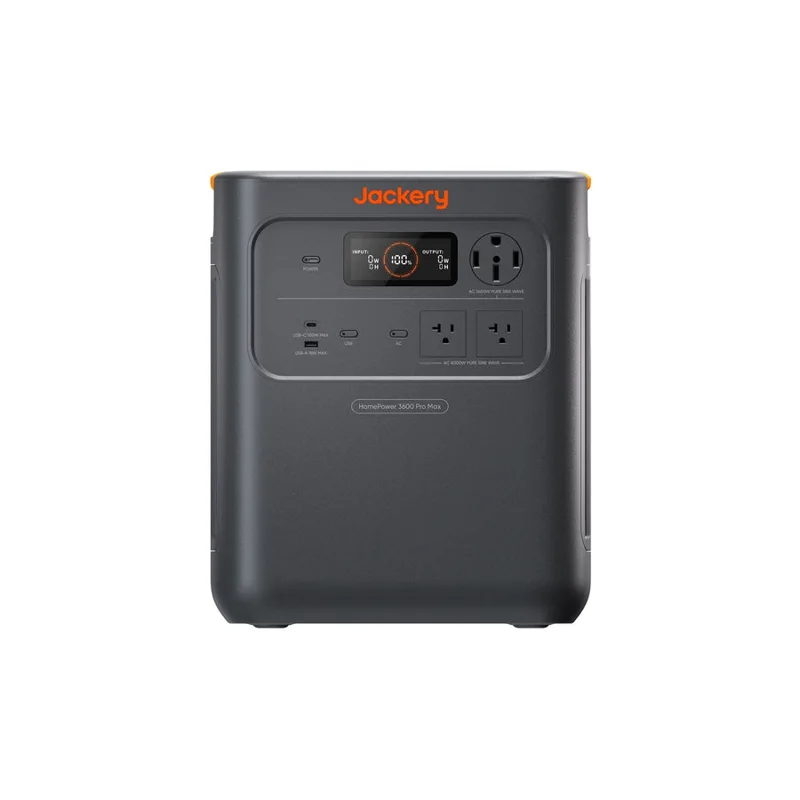
Jackery HomePower 3600 Pro Max

Spec score: 5.7 / 10 · provisional

3–5 kWh · 20 catalogue models · 90% of weighted inputs available.

No points awarded for missing inputs: Verified warranty terms; Dated recall research. This is incomplete research, not a safety finding.

Price input: Amazon, station only, checked Oct 17, 2026.

Score calculation and limitations →

Best for · The lightest route to 240 V output in this group

Jackery HomePower 3600 Pro Max

3,584 Wh rated4,000 W continuousLFP120/240 V73.85 lb

≈ 0.6 days at reference daily energy · calculated, 85% efficiency, before solar

Recall status: not checked yet. Check the CPSC database before buying.

$2,099

Amazon · as of · station only

Check price at Amazon →
Pros
  • Lightest of these three
  • Jackery offers manual, automatic and smart transfer switches for it
  • Expands with Jackery's Battery Pack 3600 Plus
Trade-offs
  • Lowest solar input of the three
  • Its headline output is the 240 V figure; check the 120 V per-outlet limit in Jackery's specs

Known continuous load: 2,420 W against 4,000 W — within the published rating.

Surge check: within the published rating

3,000 W starting + 920 W other running loads, against 8,000 W surge. Boost modes do not count for motors. Check continuous output separately.

Side by side

Core specs· published specs; runtimes calculated
Core specs EcoFlow DELTA Pro 3Anker SOLIX F3800 PlusJackery HomePower 3600 Pro Max
Outlets / home integration TT-30: 1; L14-30: 1; Smart Home Panel 2 (up to 3 DELTA Pro 3); Transfer Switch (306A per bundle SKU); DELTA Pro 3 Whole-Home Power Kit (bundle) TT-30: 1; L14-30: 1; Anker SOLIX Home Power Panel; Anker SOLIX Double Power Hub; Transfer switch / inlet box via L14-30R; Anker SOLIX Generator Input Adapter; F3800 Plus Smart Home Power Kit; F3800 Plus Home Backup Kit TT-30: 0; L14-30: 0; Manual Transfer Switch (existing MTS); Jackery Automatic Transfer Switch; Jackery Smart Transfer Switch; Jackery Manual Transfer Switch bundle (HomePower 3600 Pro Max + MTS + 40A Charging Cable)
240 V output — this load needs 240 V Yes — check required configuration Yes — check required configuration Yes — check required configuration
Reference daily energy coverage ≈ 0.7 days (85% efficiency; no solar) CALC ≈ 0.6 days (85% efficiency; no solar) CALC ≈ 0.6 days (85% efficiency; no solar) CALC
Rated capacity 4,096 Wh 3,840 Wh 3,584 Wh
Continuous AC output 4,000 W 6,000 W 4,000 W
Surge 8,000 W 9,000 W 8,000 W
Voltage 120/240 split-phase V 120/240 split-phase V 120/240 V
UPS switchover 10 ms 20 ms 10 ms
Weight 113.5 lb 136.7 lb 73.85 lb
Cycle rating 4,000 to 80% 3,000 to 80% 6,000 to 70%
Price · station only
$2,799

Amazon · as of · station only

$0.68 per rated Wh · CALC · Amazon · Oct 17, 2026 · station only

Check price at Amazon →
$2,599.99

Amazon · as of · station only

$0.68 per rated Wh · CALC · Amazon · Oct 17, 2026 · station only

Check price at Amazon →
$2,099

Amazon · as of · station only

$0.59 per rated Wh · CALC · Amazon · Oct 17, 2026 · station only

Check price at Amazon →
Full specifications, measurements and source details
Core specs
Specification EcoFlow DELTA Pro 3Anker SOLIX F3800 PlusJackery HomePower 3600 Pro Max
Measured usable energy 3,790 Wh · OutdoorGearLab

Usable AC output measured by OutdoorGearLab in its best power stations roundup (updated 2026-07-23). The per-model test load is not stated; usable share falls at small loads.

LAB
Not published Not published
Price per measured usable Wh · station only $0.74 per usable Wh · CALC · Amazon · Oct 17, 2026

Uses the sourced AC measurement above; test conditions vary between models.

Not published — requires a sourced measurement and dated price Not published — requires a sourced measurement and dated price
Outlets / home integration TT-30: 1; L14-30: 1; Smart Home Panel 2 (up to 3 DELTA Pro 3); Transfer Switch (306A per bundle SKU); DELTA Pro 3 Whole-Home Power Kit (bundle)
BRAND
TT-30: 1; L14-30: 1; Anker SOLIX Home Power Panel; Anker SOLIX Double Power Hub; Transfer switch / inlet box via L14-30R; Anker SOLIX Generator Input Adapter; F3800 Plus Smart Home Power Kit; F3800 Plus Home Backup Kit
BRAND
TT-30: 0; L14-30: 0; Manual Transfer Switch (existing MTS); Jackery Automatic Transfer Switch; Jackery Smart Transfer Switch; Jackery Manual Transfer Switch bundle (HomePower 3600 Pro Max + MTS + 40A Charging Cable)
BRAND
240 V output — this load needs 240 V Yes — check required configuration
BRAND
Yes — check required configuration
BRAND
Yes — check required configuration
BRAND
Reference daily energy coverage ≈ 0.7 days (85% efficiency; no solar)
CALC
≈ 0.6 days (85% efficiency; no solar)
CALC
≈ 0.6 days (85% efficiency; no solar)
CALC
Rated capacity 4,096 Wh
BRAND
3,840 Wh
BRAND
3,584 Wh
BRAND
Continuous AC output 4,000 W
BRAND
6,000 W
BRAND
4,000 W
BRAND
Surge 8,000 W
BRAND
9,000 W
BRAND
8,000 W
BRAND
Voltage 120/240 split-phase V
BRAND
120/240 split-phase V
BRAND
120/240 V
BRAND
UPS switchover 10 ms
BRAND
20 ms
BRAND
10 ms
BRAND
Weight 113.5 lb
BRAND
136.7 lb
BRAND
73.85 lb
BRAND
Cycle rating 4,000 to 80%
BRAND
3,000 to 80%
BRAND
6,000 to 70%
BRAND
Price · station only
$2,799

Amazon · as of · station only

$0.68 per rated Wh · CALC · Amazon · Oct 17, 2026 · station only

Check price at Amazon →
$2,599.99

Amazon · as of · station only

$0.68 per rated Wh · CALC · Amazon · Oct 17, 2026 · station only

Check price at Amazon →
$2,099

Amazon · as of · station only

$0.59 per rated Wh · CALC · Amazon · Oct 17, 2026 · station only

Check price at Amazon →

The maths, shown

Every runtime here is calculated from rated capacity. Here is the first pick, step by step.

4,096 Wh rated × 0.85 ÷ 5,180 Wh/day = ≈ 0.7 days calculated coverage, before solar.

Daily energy uses each explicit dailyWh, otherwise runningW × 8 hours/day. Output and surge checks use running watts separately.

Before you buy

A power station reaches your home circuits through a power inlet with an interlock on the main panel, a listed manual transfer switch, or the brand's own home panel. Each of those is installed by a licensed electrician, and your local building department can tell you whether a permit is needed. Never backfeed a house through a wall outlet.

Read our connection and power-station safety guidance before connecting home circuits.

Questions

What size power station do I need for home backup?

Add up the daily energy of the things you need to keep running, then compare it with the station's rated capacity after losses. Our reference outage day above needs more than any single station here holds, which is why most buyers back up a few essentials rather than the whole house. A fridge alone uses roughly 1.0 to 1.3 kWh a day for a full-size ENERGY STAR model; your own fridge's yellow EnergyGuide label gives its figure.

Can a portable power station run my whole house?

Not on its own. Central air, electric heat, electric water heaters and dryers draw far more than a portable station supplies for long: Champion's chart puts an electric dryer at 4,000 to 6,000 W. Expansion batteries and a home panel stretch what a station can cover, but whole-home battery systems installed by a contractor are a different category from what this page compares.

Do I need 240 V output?

Only if something you need to run is a 240 V appliance. Many well pumps, electric dryers, central air units and electric water heaters are, and a 120 V-only station cannot run them at any wattage. All three stations here list 240 V output, but using it for a home circuit still depends on a compatible transfer switch or panel and an electrician's installation.

How long will one of these last in an outage?

Each card shows days of coverage for our reference outage day, calculated from rated capacity at 85 percent efficiency before any recharging. Cut the list to what you truly need and it lasts longer. Expansion batteries, solar panels or a generator are how you get through outages measured in days rather than hours.

Are these figures measured?

No. They are calculated from rated capacity, based on manufacturer specs and published third-party measurements. Where an independent reviewer has measured a station's usable output, the table shows it with a link to the source. In OutdoorGearLab's load-bank tests, stations delivered 75 to 93 percent of their rated capacity as AC power.

Can I still get a federal tax credit for a home battery?

Not for new purchases. The IRS says the residential clean energy credit (25D) is not allowed for expenditures made after December 31, 2025, and an expenditure counts as made when installation is complete. Some brand pages still advertise a 30 percent credit; we don't repeat that claim. Check DSIRE and your utility for state or local incentives.

Sources

Specifications are manufacturer claims unless another source type is shown. Price dates appear beside each price.